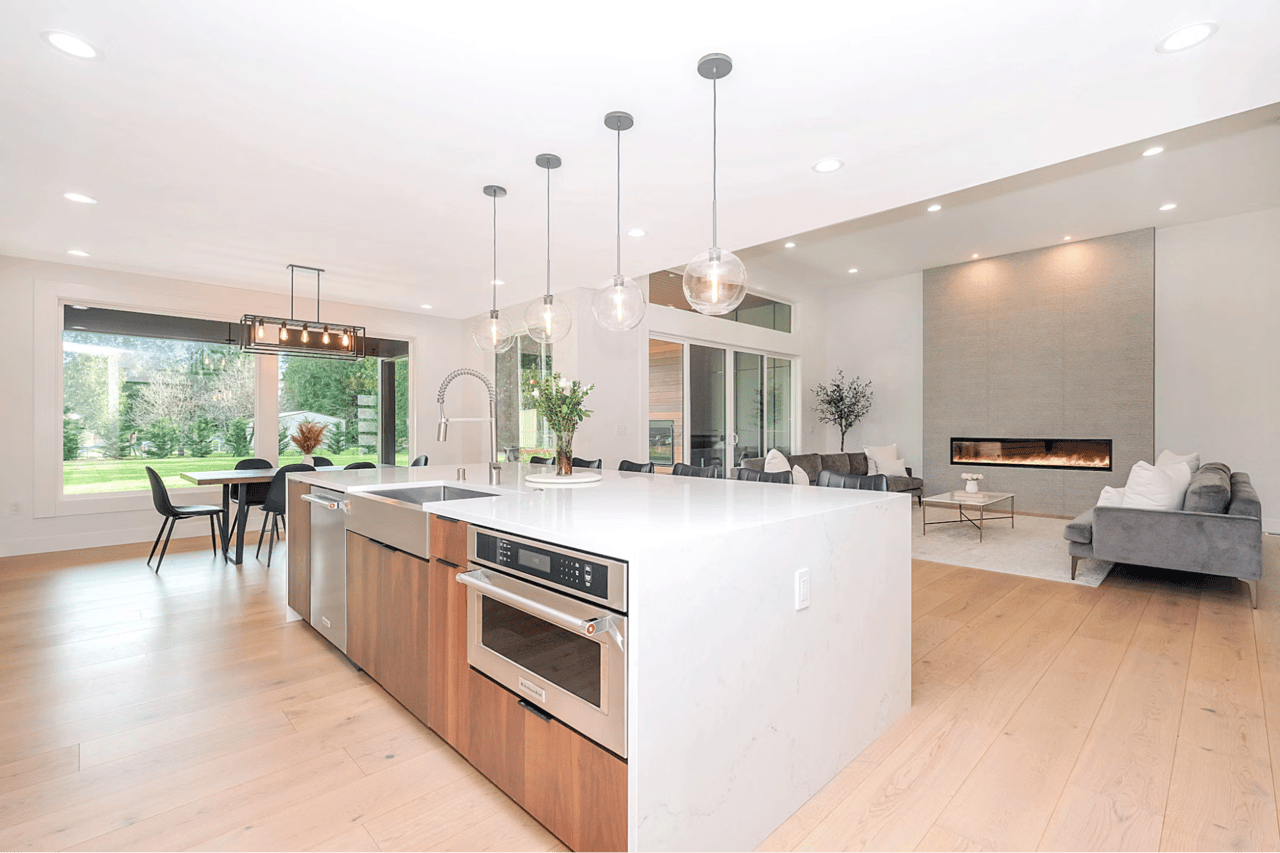

Picture two three-bedroom homes in the same Estes Park subdivision, same year built, same recent kitchen update, same view of the same ridgeline. A buyer touring both would be forgiven for assuming they're worth close to the same number. They are not, and the difference has nothing to do with the house itself. It comes down, as the Estes Valley STR Requirements page explains, to a single date on a piece of paper neither buyer has seen yet: October 18, 2021.
That date is the line the Town of Estes Park drew between vacation home licenses that survive a sale and licenses that die with it. A license that has operated continuously since before that day can transfer to a new owner. A license issued after it generally cannot. The house doesn't know the difference. Confirming the license history with the Town Clerk's office can change what the buyer is actually purchasing.
Two Houses, Same Bones, Different Asset
A Vacation Home License in Estes Park is not a feature of a house the way a finished basement or a two-car garage is. It's a separate, government-issued right to operate a short-term rental in a residential zone, and residential zones are capped. That means the license itself carries value independent of the structure it's attached to, and that value depends entirely on whether it moves with the deed.
Under the current rules, an active license in a residential zoning district transfers automatically only if it has been operating continuously with the required license since before October 18, 2021. Everything issued on or after that date is non-transferable by default. Sell the house, and the license terminates. The new owner starts from zero, subject to whatever waitlist or lottery happens to be running that year.
So the same floor plan, the same square footage, and the same finishes can carry two very different price tags depending on which side of that date the license falls on. One house is selling a structure plus a transferable permit. The other is selling a structure plus a maybe.
Why the Number Is Fixed At All
The scarcity here isn't a market accident. It's policy. Estes Park has licensed short-term rentals in residential neighborhoods since 2012, and in December 2016 the Town capped the total at 588, as the Estes Valley Voice reported. The Town of Estes Park reports that in 2020, that single number was split between jurisdictions: 322 residential licenses inside Town limits and 266 in the unincorporated Estes Valley under Larimer County. The Larimer County planning page lists the county's share at 208 registrations.
Every one of those numbers is a ceiling, not a floor. New residential construction doesn't create new licenses. A homeowner who wants to add a vacation rental in a capped zone isn't competing against the market. They're competing against a fixed inventory that only opens up when an existing license lapses, gets revoked, or fails to renew.
The Two Jurisdictions, Side by Side
Where a property sits, inside Town limits or in unincorporated Larimer County, determines which set of rules and which cap applies.
| Town of Estes Park | Larimer County (unincorporated Estes Valley) | |
|---|---|---|
| Residential license cap | 322 | 208 |
| Waitlist mechanism | Estes Park News reports that the lottery opens when 10 or fewer names remain | Standing waitlist |
| Recurring fee | $1,500 Workforce Housing Regulatory Linkage Fee (2026), adjusted annually | $250 renewal fee every two years, starting January 1, 2026 |
A buyer comparing a listing just inside Town limits to one a few hundred yards away in the county isn't just comparing school district lines or road maintenance responsibility. They're comparing two entirely separate licensing systems with different caps, different fee schedules, and different waitlist mechanics.
What Changed in December 2025
The rules governing who can even hold one of these licenses shifted again recently. On November 12, 2025, the Estes Park Board of Trustees approved Ordinance 18-25, which took effect in mid-December 2025. It made a few changes that matter more than they sound like they would on paper.
The first is about ownership structure. Under the old system, a license could be held in the name of whatever entity owned the property, an LLC, a trust, a corporation. Under the new rule, a non-transferable license has to be held by a natural person, up to two individuals with an actual ownership stake, regardless of how the property is titled. A buyer purchasing through an LLC now has to plan around that requirement before assuming the license comes along for the ride.
The second is about enforcement. It's now a violation to simply advertise an unlicensed property as a vacation rental, even if it's never actually rented. The Town can fine that up to $2,650 per day the listing stays up. That's a meaningful change for anyone who assumed they could list a property while a license application worked its way through the system.
The third loosens something. The ordinance removed the requirement that an owner be absent during a rental, so a property can now operate as either hosted or unhosted. An owner can live in part of the home while renting the rest, as long as total occupancy, counting residents and guests, still fits within the standard two-per-bedroom-plus-two limit.
The Lottery Is Not a Backup Plan
For anyone thinking they'll just wait for a new license rather than pay a premium for an existing transferable one, it helps to know how badly that plan has gone before.
When the Town placed a moratorium on the residential waitlist in October 2021, there were 60 households already in the queue, facing a projected wait of five to seven years. Nobody after that could even apply. The waitlist stayed frozen for years.
The Estes Valley Voice reported that the waitlist finally cleared in 2025 and the Town replaced first-come-first-served with a lottery. The mechanism now runs on an as-needed basis: whenever the list drops to ten or fewer names, the Town opens a new drawing and fills up to thirty slots. The first cycle under this system closed applications on March 20, 2026, and held its drawing on March 30, 2026.
Winning a slot on that list is not the same as owning a transferable license. It gets an applicant into a queue for a license that, once issued, will itself be non-transferable under the post-2021 rules. It's a new asset, not a substitute for an old one.
The Recurring Costs Attached to the Number
None of this scarcity is free to hold onto, either. Every licensed vacation home inside Town limits pays a Workforce Housing Regulatory Linkage Fee on top of the base license fee, set at $1,500 for 2026 and adjusted for inflation each October. Properties in unincorporated Larimer County now carry a separate $250 renewal fee due every two years starting January 1, 2026.
Anyone underwriting a rental purchase off a gross-revenue estimate found online should build these fees into the net math before comparing two properties on projected income alone. A license with a low listed rental history but a clean transfer path can still outperform one with strong recent numbers and no transfer eligibility.
What to Check Before Writing an Offer
Confirming a property's license status takes a few specific steps, ideally before an offer goes in rather than during an inspection period:
- Whether the parcel sits inside Town limits or in unincorporated Larimer County, since that determines which cap, fee schedule, and office to call
- The zoning district, since non-residential zones aren't subject to either cap
- The license's issue date and whether it has operated continuously since before October 18, 2021
- Whether the property has an accessory dwelling unit, which STR City Regulations says disqualifies a residential lot from holding a vacation home license at all
- Any HOA covenants or recorded restrictions that might limit short-term rental use regardless of what the Town or County allows
The Town Clerk's office and Larimer County's planning department can confirm license status for a specific address. That's a phone call worth making before the inspection deadline, not after.
A Few Questions Buyers Ask
If a house is currently operating as a rental, does the license automatically come with it? Not automatically. Transfer depends on when the license was issued and whether it has been in continuous use since before October 18, 2021. A currently active listing doesn't guarantee that status.
Can I just apply for a new license today? Only if a lottery round is open. The Town runs its drawing when the waitlist drops to ten or fewer names, filling up to thirty slots at a time. Larimer County maintains its own separate waitlist for county-zoned properties.
Does the license change what a house is actually worth? It changes what the buyer is getting for the price, which is a different question than square footage or condition. A transferable license and a non-transferable one attached to otherwise identical homes represent different bundles of rights, and that's worth pricing accordingly rather than assuming the number on the listing already accounts for it.
If you're comparing two Estes Park properties and trying to figure out what's actually attached to each one, from the license history to the jurisdiction to the fees that come with it, Estes Park Team Realty can help you confirm the specifics before you write an offer.
This article is general information, not legal, tax or financial advice. Consult a qualified professional about your situation.