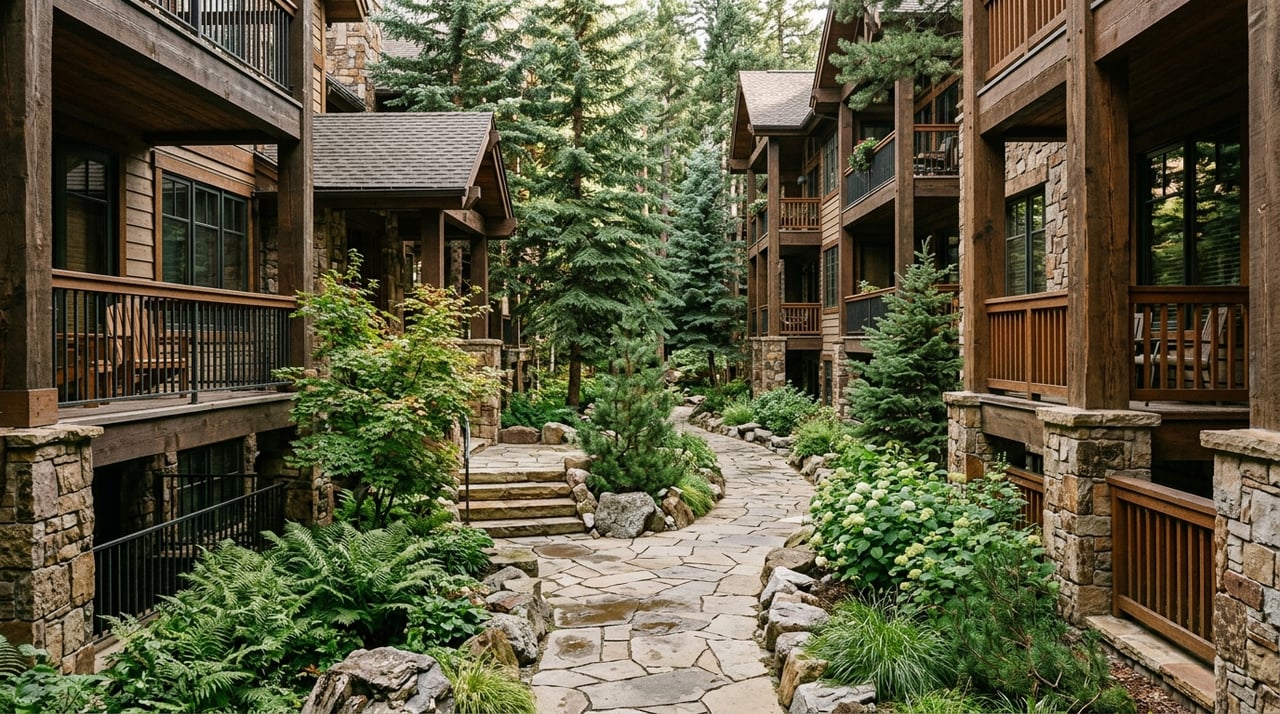
Wondering why so many home searches in the Estes Valley start with Estes Park? If you are comparing mountain communities, it helps to know which area serves as the everyday hub and which ones offer a more rural, secluded feel. This guide breaks down how Estes Park connects the surrounding mountain communities so you can better match your lifestyle, access needs, and property goals. Let’s dive in.
Estes Park's Role in the Valley
Estes Park is the incorporated center of the Estes Valley. Larimer County treats the Town of Estes Park and the broader Estes Valley Planning Area as related but distinct places, with the town handling its own zoning, development review, utilities, and municipal services inside town limits.
That matters when you are buying or selling. In practical terms, Estes Park often becomes the baseline for comparing convenience, services, and town-centered housing with the more rural communities that surround it.
The town itself had 5,904 residents and 6.8 square miles of land area in the Census Bureau profile referenced in the research. Larimer County also notes that more than half of the county is publicly owned, much of it in Roosevelt National Forest and Rocky Mountain National Park, which helps explain the area’s low-density mountain character.
Why Estes Park Anchors Local Decisions
If you are looking at homes across the Estes Valley, Estes Park often serves as the decision-making anchor. It combines a clearer municipal structure with town-based services, which can make day-to-day planning feel more straightforward than in nearby unincorporated areas.
That does not mean it is automatically the right fit for everyone. It means Estes Park gives you a useful point of comparison when you weigh access, road systems, service structure, and the type of housing setting you want.
How Nearby Communities Compare
Each nearby mountain community connects back to Estes Park in a different way. The biggest differences usually come down to location, access routes, service structure, and the overall housing pattern.
Allenspark and Estes Park
Allenspark offers a different mountain experience from Estes Park. Boulder County describes it as an unincorporated community in northwest Boulder County, and it sits along the Peak to Peak Highway about 12 miles south of Estes Park.
For many buyers, that means a more secluded setting and a stronger sense of separation from town. Census data in the research shows Allenspark had a 2020 population of 568 and 11.9 square miles of land area, which supports its lower-density mountain feel.
Glen Haven and Estes Park
Glen Haven is about 7 miles north of Estes Park and is reached by turning off US 34 at Drake onto County Road 43. Local sources describe it as a small mountain community with a strong mix of summer family cabins and year-round homes.
If you are drawn to cabin-style living and forest surroundings, Glen Haven may stand out. At the same time, its road access and local history, including major impacts from the 2013 flood, make due diligence especially important.
Drake and Estes Park
Drake sits in the Big Thompson Canyon area where County Road 43 intersects US 34. Larimer County places it generally northeast of Estes Park and ties the area to access routes like US 34, County Road 43, County Road 29, County Road 27, and Glade Road.
For buyers, Drake often represents canyon living with direct corridor access. It can appeal if you want a more rural setting, but it also comes with the tradeoffs that often go with canyon geography and roadway access.
Pinewood Springs and Estes Park
Pinewood Springs is located on US Highway 36 about 13 miles southeast of Estes Park. Larimer County and the local fire district information in the research point to a subdivision-style road network and a district-based service structure.
That gives Pinewood Springs a different feel from Estes Park’s incorporated town pattern. If you want a rural subdivision setting along the US 36 corridor, this community may be worth a closer look.
What Buyers Usually Weigh First
When you compare Estes Park with nearby mountain communities, a few practical questions tend to shape the decision early.
Services and Government Structure
Estes Park stands out because it is incorporated and has its own municipal services, utilities, zoning, and development review. In surrounding areas, the service picture can be more district-based, county-based, or tied to specific corridors and local access patterns.
For some buyers, that means Estes Park feels more centralized. For others, the appeal of a less town-centered setting outweighs the added complexity.
Access and Road Reality
In the Estes Valley, the road itself is part of the property decision. Larimer County says subdivision-road maintenance can be very limited, and where the county has not accepted maintenance, residents or HOAs may be responsible.
Even county-maintained roads may receive only limited work such as snow removal, sign maintenance, chipseal, crack seal, minor pothole repair, and some minor drainage work. That is why access, road condition, and maintenance responsibility deserve close attention before you buy.
Housing Character
Estes Park often appeals to buyers who want a stronger town-centered housing base. Glen Haven is known for cabins and year-round mountain homes, Drake reflects a more rural canyon profile, Pinewood Springs offers a rural subdivision feel, and Allenspark gives buyers a more secluded option outside Larimer County.
These differences can shape how a property feels in every season. They can also affect your expectations around privacy, travel patterns, and day-to-day convenience.
A Quick Value Snapshot
Larimer County’s TY2025 residential improved value model offers a broad comparison point across parts of the market. It is not a live pricing report, but it can help illustrate relative housing context.
| Community | Median Residential Improved Value |
|---|---|
| Estes Park | $672,200 |
| Allenspark | $780,400 |
| Glen Haven | $520,850 |
| Drake | $411,600 |
These figures use an appraisal date of June 30, 2024, according to the research. They are best used as a general snapshot, not as a substitute for current listings or a property-specific market analysis.
Why Due Diligence Matters Here
In many markets, buyers focus first on square footage, finishes, and price. In the Estes Valley, you also need to think carefully about access, emergency response patterns, and the physical setting around the home.
Wildfire Readiness
Wildfire planning is a normal part of mountain-market due diligence. The research notes active wildfire-prevention resources in Pinewood Springs, a community wildfire protection plan and mitigation projects there, and wildfire property assessments offered through the Estes Valley Fire Protection District.
That means you should look beyond the home itself. Ask questions about mitigation work, defensible space, and evacuation routes as part of your decision.
Flood History
Flood history matters too, especially in communities shaped by canyon or creek access. Glen Haven’s local history shows how the 2013 flood affected infrastructure and emergency response.
For buyers, that does not automatically rule an area in or out. It simply means flood history should be part of your property review, along with access routes and site-specific conditions.
How Estes Park Connects It All
Estes Park connects the Estes Valley mountain communities by serving as the incorporated reference point for services, planning, and town-centered living. The surrounding communities each relate to it through different roads, service districts, county systems, and housing patterns.
That is why so many mountain property conversations come back to one central tradeoff: town convenience versus mountain isolation. Estes Park tends to offer the clearest path to municipal services and a central location, while Allenspark, Glen Haven, Drake, and Pinewood Springs each offer a distinct version of mountain living.
If you are trying to narrow your search, the goal is not to find the “best” community in the abstract. It is to find the place that best fits how you want to live, travel, maintain a property, and enjoy the Estes Valley year-round.
With more than 100 years of combined Estes Valley experience, Estes Park Team Realty helps buyers and sellers make sense of these mountain-market differences with practical, local guidance.
FAQs
How does Estes Park differ from other Estes Valley mountain communities?
- Estes Park is the incorporated hub with its own zoning, utilities, and municipal services, while nearby communities are generally more rural and rely on county, corridor, or district-based structures.
How far is Allenspark from Estes Park?
- The research places Allenspark about 12 miles south of Estes Park along the Peak to Peak Highway.
What is Glen Haven like compared with Estes Park?
- Glen Haven is a small mountain community about 7 miles north of Estes Park, known for summer cabins, year-round homes, and close forest surroundings.
What should buyers know about Drake in the Estes Valley?
- Drake offers a more rural canyon setting with primary access tied to US 34 and nearby county roads, so buyers should pay close attention to access and corridor-related tradeoffs.
What makes Pinewood Springs different from Estes Park?
- Pinewood Springs is a rural community on US 36 with a subdivision-style road network and district-based local services, which gives it a different feel from Estes Park’s town-centered structure.
Why do roads matter when buying near Estes Park?
- Larimer County says subdivision-road maintenance may be limited, and some roads may be maintained by residents or HOAs, so road condition and maintenance responsibility are important parts of due diligence.
Why are wildfire and flood history important in the Estes Valley?
- The research shows that wildfire mitigation and flood history are standard property-review topics in this market because they affect access, preparedness, and long-term property use.